

Quick answer: Normal pressure hydrocephalus (NPH) causes three classic symptoms: difficulty walking, memory problems, and loss of bladder control. Walking almost always changes first. Because these look like ordinary ageing, NPH is frequently missed — yet it is one of the few treatable causes of dementia-like decline.
Key Takeaways
- NPH affects older adults and produces a triad of gait, memory and bladder symptoms.
- Walking difficulty usually appears first — this ordering is the key diagnostic clue.
- An estimated 800,000 older Americans may have NPH, and more than 80% are unrecognised or untreated.
- It is regularly misdiagnosed as Alzheimer’s or Parkinson’s disease.
- Unlike most causes of dementia, NPH can improve substantially after shunt surgery.

I met a woman at a caregiver support meeting last spring — the kind where almost everyone is there because of their own child, not a parent. Her story ran the other way. The diagnosis in her family came not at birth, but in her father, at seventy-four, and it took eight months to arrive.
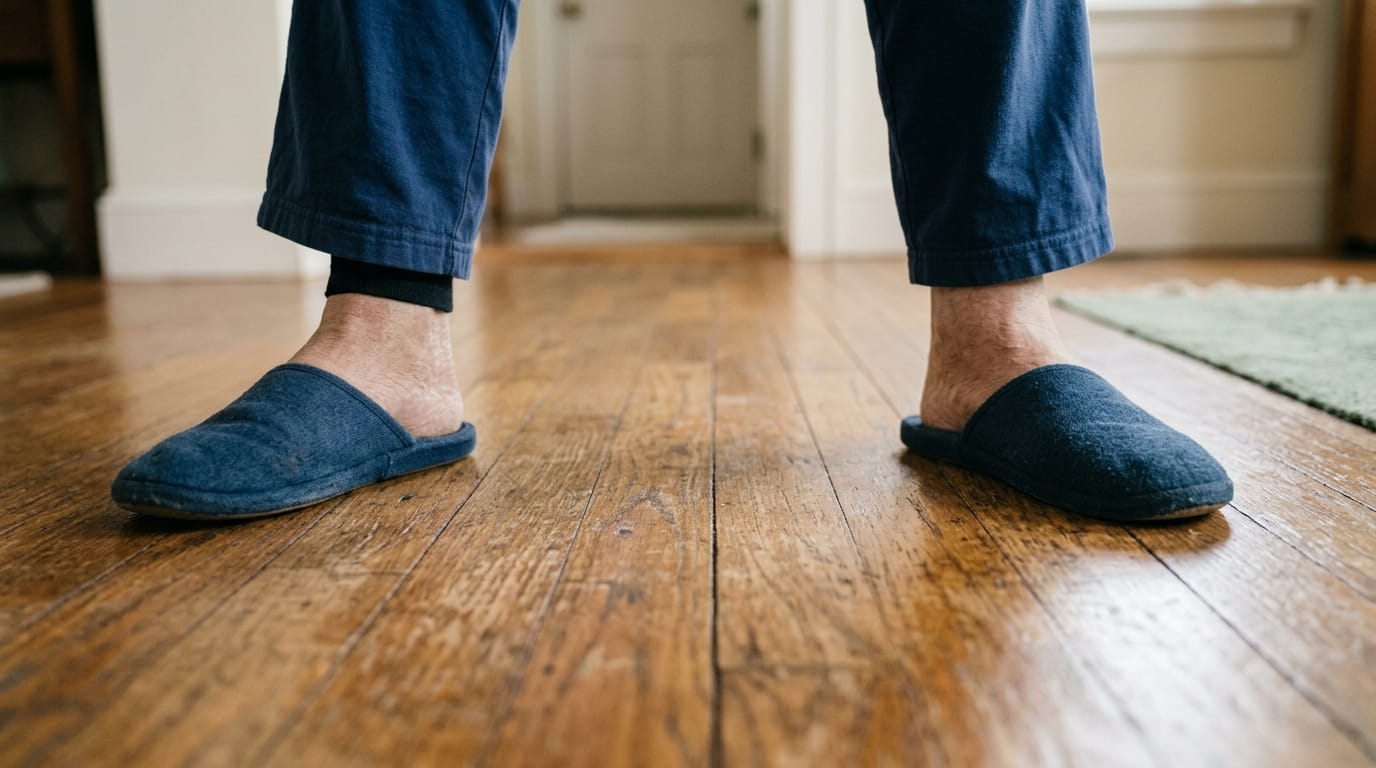
Her father had started walking differently first. Not stumbling exactly — more like his feet had forgotten they were allowed to lift properly. Steps grew short and shuffling. Turning, which used to take one smooth pivot, now took four or five careful shuffles. She blamed his knees. Her mother blamed his age. Then came the falls, always backwards, always explained away by the rug, the step, his slippers. His memory slowed too, though he could still recite his grandchildren’s birthdays without pausing.
She was the one who finally filmed him walking down the hallway, meaning to send the clip to a physiotherapist friend. That video — not an exam room — is what first raised the word hydrocephalus in their house. Not the kind our own family knows. A different, older-onset version that hides in plain sight because it looks so much like ordinary ageing.
What Normal Pressure Hydrocephalus Actually Is
What her father had, it turned out, is called normal pressure hydrocephalus — a name that undersells how serious it is, because a build-up of cerebrospinal fluid (CSF) in the brain’s ventricles produces pressure measurements that come back within the normal range. That normal reading is precisely why the condition is so easily dismissed, and why it took her eight months to get an answer.
The ventricles enlarge slowly. Because the change is gradual, the brain adapts and pressure does not spike in the way it does in childhood hydrocephalus. However, the enlarged ventricles still stretch nearby nerve fibres — particularly those controlling the legs and bladder.
This explains the pattern of symptoms. The nerve tracts serving the legs run closest to the ventricles, which is why walking is usually affected before anything else.
The 7 Signs Families Miss
Looking back, she could name every one of these seven signs in her father. She simply did not know, at the time, that they were connected.
These signs rarely arrive together. They accumulate over months, and each one on its own looks like something else.
- A magnetic gait — feet seem stuck to the floor, steps become short and shuffling, and turning takes several small steps.
- Widened stance — the person walks with feet further apart than before, seeking stability.
- Unexplained falls — particularly backwards, and often blamed on carelessness or poor eyesight.
- Slowed thinking rather than forgetting — in NPH, processing speed and planning suffer more than the dense memory loss typical of Alzheimer’s.
- Apathy or flatness — reduced interest and initiative, frequently mistaken for depression.
- Urinary urgency, then incontinence — usually the last of the triad to appear.
- Difficulty starting movement — hesitation at doorways or before standing, which strongly resembles Parkinson’s disease.
Why NPH Is So Often Mistaken for Dementia
Her father’s own doctor thought of Alzheimer’s first — which is exactly the trap this section is about.
The overlap is genuine. Memory difficulty, slowed thought and apathy appear in both NPH and Alzheimer’s disease, and both become more common with age.
The distinguishing feature is usually order and gait. In Alzheimer’s, memory typically declines well before walking is affected. In NPH, walking changes first and memory follows. According to the Alzheimer’s Association, the similarity to Alzheimer’s, Parkinson’s and Creutzfeldt-Jakob disease means NPH is frequently overlooked or misdiagnosed.
Additionally, NPH does not cause the dense, recent-memory loss that characterises Alzheimer’s. People with NPH more often say their thinking feels slow rather than absent.

What the Research Shows
This is close to what happened in her family. Her father’s doctor ordered a tap test — the same test described in the research below — before agreeing to refer him for a shunt.
Gait apraxia — difficulty coordinating walking despite intact strength — is present from the earliest stages of idiopathic NPH. A 2022 study published in Fluids and Barriers of the CNS used wearable inertial sensors to measure walking objectively before and after treatment, testing whether the cerebrospinal fluid tap test predicts who will benefit from a shunt.
The tap test involves removing a small volume of CSF by lumbar puncture and then re-measuring walking. Temporary improvement suggests a shunt is more likely to help. The researchers noted that the predictive accuracy of this test remains debated, which is worth knowing if you are told the result is borderline.
This matters practically. A negative tap test does not always rule out benefit, and some centres proceed to extended lumbar drainage when clinical suspicion stays high.
What This Means for Your Family
If an older relative’s walking has changed and memory problems followed rather than preceded it, that ordering is worth raising specifically with their doctor.
Take a video. A 20-second clip of someone walking down a hallway and turning around communicates more than any description, and turning is where NPH gait is most obvious.
Ask directly whether NPH has been considered and whether a brain scan is warranted. You are not being difficult. Given that most cases go unrecognised, asking the question is often what starts the process.
This is exactly what she did, without anyone telling her to.

Questions to Ask the Doctor
- Ask: could this be normal pressure hydrocephalus rather than Alzheimer’s or Parkinson’s?
- Ask: has a CT or MRI been done to look at the ventricles?
- Ask: does the order of symptoms — walking first, memory later — change your thinking?
- Ask: would a CSF tap test or extended lumbar drain be appropriate?
- Ask: if the tap test is negative but symptoms fit, what happens next?
- Ask: who would assess suitability for shunt surgery at this age?
Frequently Asked Questions
What are the first signs of normal pressure hydrocephalus?
Walking usually changes first. The gait becomes slow, wide-based and shuffling, as though the feet are stuck to the floor, and turning requires several small steps. Memory and concentration problems follow, and bladder urgency typically appears last.
How is normal pressure hydrocephalus different from dementia?
In NPH, walking difficulty usually comes before memory problems, and thinking is slowed rather than densely forgetful. In Alzheimer’s disease, memory declines well before gait is affected. NPH is also potentially reversible with shunt surgery, which is not true of Alzheimer’s.
Is normal pressure hydrocephalus curable?
It is treatable rather than curable. A shunt drains excess fluid and many people improve substantially, particularly in walking. Gains are usually greatest when treatment happens early, before symptoms have been present for years.
What is the tap test for NPH?
A tap test removes a small amount of cerebrospinal fluid by lumbar puncture, after which walking is re-measured. Temporary improvement suggests a shunt is likely to help. Its predictive accuracy is debated, so a negative result does not always rule out benefit.
How common is normal pressure hydrocephalus?
An estimated 800,000 older adults in the United States may have NPH, and more than 80% are thought to be unrecognised or untreated. It becomes more common with age and is most often diagnosed after 60.
Her father had his shunt fitted nine weeks after that hallway video. He was walking down his own driveway unaided within a month, and by the time I met her at that support meeting, she was laughing about how he had taken up power-walking so fast around the block that she could no longer keep pace with him. Not every case resolves this cleanly — some improve only partially, and improvement is slower when treatment starts late. But her father’s turnaround began the moment someone said the word out loud, on a phone video in a hallway, instead of writing it off as age.
If someone in your life has started walking like the floor isn’t quite level anymore, that is worth naming too. It might be nothing. It might be exactly what happened in this family.
Related Reading
- Hydrocephalus in Adults: Symptoms and Treatment
- Hydrocephalus CT Scan and MRI: What the Images Show
- Living With a Brain Shunt: Work, Travel and Daily Life
Bibliography
- Alzheimer’s Association. Normal Pressure Hydrocephalus (NPH). Available at: alz.org
- Hydrocephalus Association. What is Normal Pressure Hydrocephalus? Available at: hydroassoc.org
- Gait apraxia evaluation in normal pressure hydrocephalus using inertial sensors: clinical correlates, ventriculoperitoneal shunt outcomes, and tap-test predictive capacity. Fluids and Barriers of the CNS. 2022. Available at: PMC9219204
- Time Course of Symptoms in Normal-Pressure Hydrocephalus: A Systematic Review. Available at: PMC12293206