
Quick answer: VP shunt infection rates in children range from 5–10% — one of the most serious but relatively common shunt complications. The most common organisms are Staphylococcus epidermidis and Staphylococcus aureus, often from skin flora at the time of surgery.

Shunt Infection Symptoms: What Every Parent Must Recognise
By Haris Bin Tahir · BrainCarePath.com
Key Takeaways
- VP shunt infection rates in children range from 5–10% — one of the most serious but relatively common shunt complications
- The most common organisms are Staphylococcus epidermidis and Staphylococcus aureus, often from skin flora at the time of surgery
- Shunt infection symptoms overlap significantly with non-infectious illness — the difference is usually in the combination of symptoms
- Most shunt infections require complete shunt removal, IV antibiotics, and reimplantation — a multi-week hospital stay
The thing about a shunt infection is that it can look, at first, like nothing more serious than the ordinary sickness of childhood. A fever. A bit of irritability. A child who does not want to eat. These are the signs of a hundred common illnesses, and parents of children with hydrocephalus learn — sometimes through painful experience — that the hardest clinical question is not “is my child sick?” but “is this the kind of sick that can wait?”
Shunt infection is the kind that cannot wait. It requires complete removal of the shunt, intravenous antibiotics, and reimplantation — a process that can take four to six weeks and carries real risks of neurological harm if treatment is delayed.
What Is a Shunt Infection and Why Does It Happen?
Key Takeaways
- The earliest signs are often non-specific — fever, irritability, and reduced feeding or appetite.
- The highest risk period is the first six months after surgery — approximately 85% of infections occur during this window.
- In most cases, no.
- Shunt infection is a serious medical emergency that can lead to meningitis, brain abscess, and sepsis if not treated promptly.
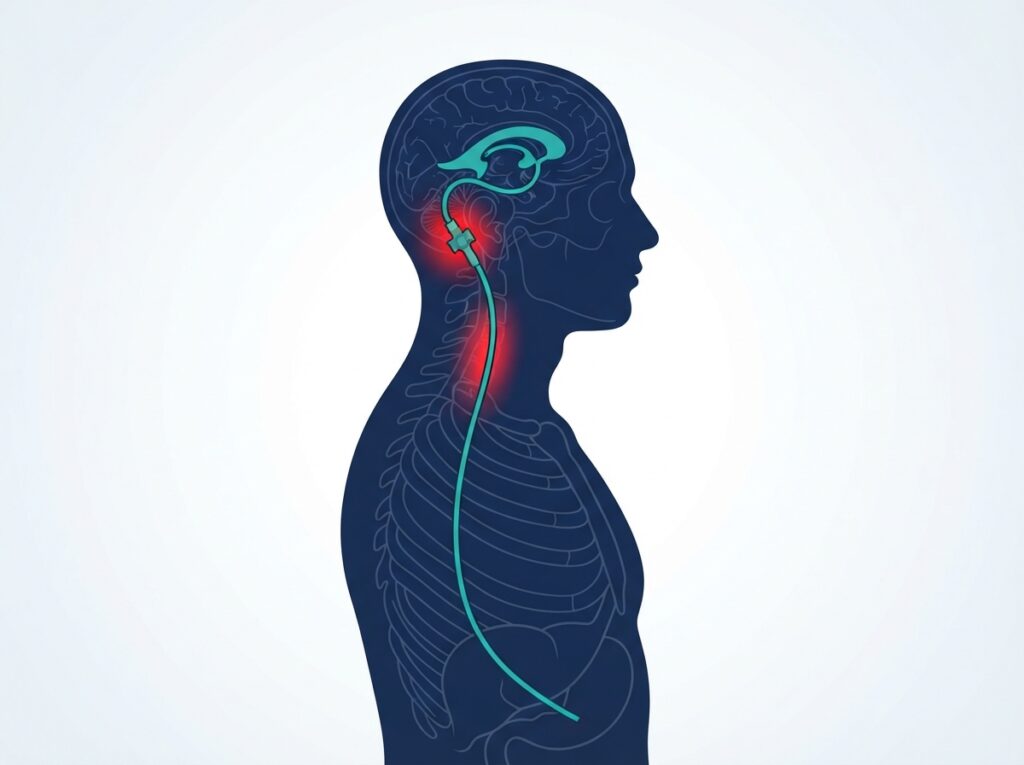
A VP shunt infection occurs when bacteria colonise the shunt hardware. Most shunt infections are caused by skin-dwelling bacteria — particularly Staphylococcus epidermidis and Staphylococcus aureus — that contaminate the shunt at the time of surgery or in the early post-operative period.
Shunt infections are not caused by anything the parents did or did not do. They are a biological consequence of placing a foreign device inside the human body. Most of the time, the immune system wins. When it does not, infection develops.
The risk is highest in the first six months after surgery. A 2020 systematic review by Farber et al. in Neurosurgery pooled data from over 8,000 paediatric shunt procedures and found an overall infection rate of 8.4%, with 85% of infections occurring within six months of the procedure. Newborns and infants under six months had approximately twice the infection rate of older children. Available at: https://pubmed.ncbi.nlm.nih.gov/32897398/
VP Shunt Infection Symptoms to Recognise
Fever is the most common systemic sign. A persistent fever above 38°C in a child with a VP shunt — particularly in the first six months after surgery — should prompt a call to your neurosurgical team or an emergency assessment, not a watchful wait.
Redness along the shunt tract is one of the most specific signs. The shunt tract runs under the skin from the valve behind the ear, down the neck and chest, and into the abdomen. If you notice redness, swelling, or warmth at any point along this route — not just at the wound — this is a red flag. Cellulitis along the shunt tract is usually a shunt infection until proven otherwise.
Neck stiffness or meningismus — resistance to flexing the neck forward — is a sign of meningeal irritation. This is a neurological emergency sign. If your child’s neck is stiff alongside fever, go to emergency immediately.
Wound breakdown or discharge at the scalp incision site in the weeks after surgery requires same-day medical assessment.
Abdominal symptoms — pain, distension, or tenderness — can indicate infection at the peritoneal end of the shunt. Any combination of abdominal symptoms and fever in a child with a shunt warrants urgent assessment.
Behavioural and neurological changes — unusual irritability, lethargy, new confusion, or deterioration in a child who has been well — can indicate that infected CSF is affecting brain function.
The Combination That Matters

No single symptom alone is sufficient for diagnosis. The combination is what matters:
- Fever + redness along shunt tract → urgent surgical assessment
- Fever + neck stiffness → emergency: go immediately
- Fever + behavioural change + vomiting → emergency: go immediately
- Wound breakdown + any systemic symptom → urgent assessment within hours
The rule for a child with a VP shunt is simpler than it sounds: if your child has fever and you are worried — if there is something different about how they are, beyond the fever — call your neurosurgical team or go to emergency. You are not being alarmist. Shunt infection moves fast, and the window between early symptoms and serious deterioration is narrow.
What Happens If a Shunt Infection Is Confirmed
Diagnostic workup will include blood tests and CSF analysis from a shunt tap — a procedure in which a small needle is inserted through the scalp into the shunt valve to withdraw a sample of CSF for culture. CSF culture is the definitive test. Results can take 24–72 hours. If clinical suspicion is high, many centres begin empirical IV antibiotics before culture results are returned.
The standard treatment for confirmed shunt infection is complete shunt removal. Bacteria adhere to silicone surfaces in a biofilm that antibiotic treatment alone cannot penetrate. Attempting to treat through an intact shunt almost always fails.
After shunt removal, a temporary external ventricular drain (EVD) is placed through the skull while the infection clears. The child receives IV antibiotics, usually for two to four weeks, with daily CSF sampling to confirm the infection is clearing. Once CSF cultures are consistently clear, the new shunt is reimplanted.
Total hospital stay for shunt infection treatment ranges from three to six weeks. Ask your hospital whether a family room or accommodation near the ward is available — most children’s hospitals have provision for families during prolonged admissions.
What the Research Shows About Outcomes

A 2022 study by McGirt et al. in Child’s Nervous System found that children who received same-day assessment and shunt removal had significantly better neurological outcomes than those whose treatment was delayed by more than 48 hours from symptom onset. Available at: https://pubmed.ncbi.nlm.nih.gov/35029724/
A 2021 study by Baird et al. in Journal of Neurosurgery: Pediatrics followed children for five years after shunt infection and found that neurodevelopmental outcomes were not significantly different from a matched group who had not experienced infection, when infection was treated promptly. Available at: https://pubmed.ncbi.nlm.nih.gov/34534946/
Prevention: What Can Parents Do?
Keep the scalp wound dry and clean for the duration recommended by your surgical team. Do not submerge the wound in water until it is fully healed. Check the wound daily in the first two weeks and report any redness, swelling, or discharge.
If your child needs an invasive dental procedure, let your dentist know they have a VP shunt. Some centres recommend antibiotic prophylaxis before dental procedures — discuss the protocol with your neurosurgical team.

Frequently Asked Questions
What are the first signs of a shunt infection in a child?
The earliest signs are often non-specific — fever, irritability, and reduced feeding or appetite. In the context of a child with a hydrocephalus shunt, particularly in the first six months after surgery, these signs should prompt a call to your neurosurgical team rather than watchful waiting. Redness along the shunt tract, neck stiffness, or abdominal pain alongside fever are more specific warning signs requiring immediate emergency assessment.
How long after shunt surgery can infection occur?
The highest risk period is the first six months after surgery — approximately 85% of infections occur during this window. However, infections can occur at any point, particularly following bloodstream infections from other sources such as urinary tract infections or dental procedures that can seed bacteria onto the shunt surface.
Can a shunt infection be treated without removing the shunt?
In most cases, no. Bacteria adhere to shunt hardware in a biofilm that antibiotic treatment cannot reliably penetrate. Standard treatment is complete shunt removal, intravenous antibiotics for two to four weeks, and reimplantation once CSF cultures are consistently clear. Attempting antibiotic treatment through an intact shunt has a high failure rate.
Is shunt infection life-threatening?
Shunt infection is a serious medical emergency that can lead to meningitis, brain abscess, and sepsis if not treated promptly. When recognised and treated quickly — with shunt removal and appropriate antibiotics — outcomes are generally good. The severity underscores why any combination of fever and neurological symptoms in a child with a shunt requires same-day medical assessment.
My son did not have a shunt infection. I want to say that clearly, because this article is full of things that could have happened to us and did not. What we had was the awareness that it could happen, and the specific dread that parents of shunted children carry quietly — the monitoring, the counting of days since surgery, the temperature checks at the first sign of lethargy.
But what I also want to say is this: if you are reading this because your child is currently being treated for a shunt infection, the research is with you. Most children who are treated promptly — who get to hospital, who have the shunt removed, who go through the weeks of antibiotics — come through it. The route is hard. The outcome, for most families, is the continuation of what was happening before: a child who is growing, learning, occasionally impossible, and yours.
This article is for informational purposes only and does not constitute medical advice. Always consult your neurologist, paediatrician, or qualified healthcare provider. Read our full medical disclaimer at braincarepath.com/disclaimer/
References: Farber et al., Neurosurgery 2020 (PMID 32897398) · McGirt et al., Childs Nerv Syst 2022 (PMID 35029724) · Baird et al., J Neurosurg Pediatr 2021 (PMID 34534946)