

Quick answer: VNS (vagus nerve stimulation) therapy is a small implanted device that sends regular electrical pulses to the vagus nerve to reduce seizure frequency in children with drug-resistant epilepsy. It does not cure epilepsy, but studies show roughly 70% of children see a meaningful drop in seizures, often over several months rather than immediately.
By the time our neurologist mentioned a device, we had already tried three medications. Each one worked for a while, and then it did not, and each failure felt like a small, private grief that nobody outside the exam room understood. So when she said “vagus nerve stimulator,” what I actually heard was: there is something else to try. That is usually the emotional context VNS gets introduced into, and it is worth naming plainly.
What Is VNS Therapy, Exactly?
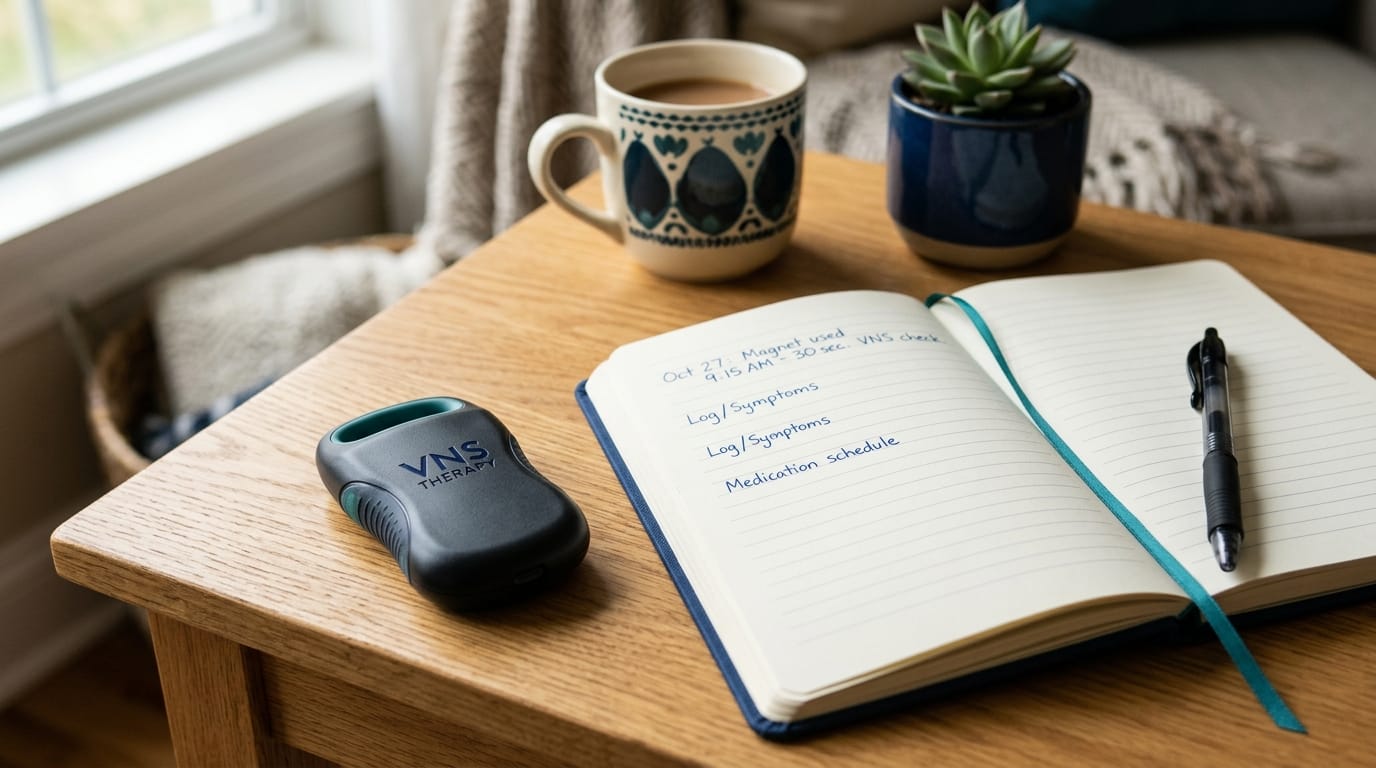
VNS therapy uses a small pulse generator, similar in size to a stopwatch, implanted under the skin of the upper chest. A thin wire runs from the generator to the left vagus nerve in the neck. The device delivers mild, regular electrical pulses on a programmed schedule — typically 30 seconds on, five minutes off, continuously — to help calm the abnormal electrical activity that causes seizures. Many devices also include a handheld magnet that a caregiver can swipe over the generator at the first sign of a seizure, delivering an extra pulse that can sometimes shorten it.
Who Is VNS Actually For?
VNS is generally considered for children with drug-resistant epilepsy — meaning two or more appropriately chosen anti-seizure medications have failed — who are not good candidates for resective brain surgery, often because their seizures originate from multiple areas or cannot be clearly localized. It is not a first-line treatment, and it is not typically offered until medication options have been genuinely exhausted, which is itself a source of frustration for parents who wish it had come up sooner.

How Well Does It Actually Work?
The honest answer is: better than many families expect, but not as a cure. According to PubMed, a 2026 systematic review focused specifically on VNS in pediatric Lennox-Gastaut syndrome pooled 527 patients from multiple studies and found that 375 — about 71% — achieved a greater than 50% reduction in seizure frequency after treatment, with some children reaching complete seizure remission (de Souza et al., Epilepsy & Behavior, 2026; DOI). The review found VNS worked particularly well for atonic drop seizures, and families also reported real improvements in alertness, attention, and sleep — benefits that do not show up on a seizure count but matter enormously day to day. The same review was candid about its limits: most included studies were observational, not randomized, and caregiver-reported outcomes carry some inherent bias.
What the Surgery and Recovery Actually Involve
VNS implantation is typically an outpatient or overnight procedure lasting one to two hours, performed under general anesthesia. Recovery is usually straightforward — some soreness at the incision sites in the neck and chest, and a hoarse voice for a few days that resolves as swelling goes down. The device is not switched on immediately; most neurologists begin stimulation two to four weeks after surgery and gradually increase settings over subsequent visits, watching for side effects like voice changes, coughing, or throat tingling during the stimulation cycle.
Why Improvement Often Takes Months, Not Days
This is the part families are least prepared for. Unlike a medication change, where you often know within days whether it is working, VNS benefit typically builds gradually over the first one to two years as settings are adjusted. Some children show little change in the first three months and then a real shift by month nine. If your child has had VNS for six weeks and nothing seems different yet, that is not necessarily a sign it has failed — it is closer to the expected timeline.

What This Means for Your Family
Battery life on most VNS generators runs eight to eleven years, after which a relatively minor outpatient procedure replaces just the generator, not the lead wire. Day-to-day life with VNS is largely unremarkable — most children forget it is there, and it does not restrict swimming, sports, or MRI scans (though the device must be disclosed to the MRI team beforehand). The magnet swipe feature is worth practicing with caregivers, teachers, and school nurses so it becomes automatic rather than fumbled in a real moment.
Questions to Ask Your Doctor
- Has my child truly exhausted reasonable medication combinations, or are there others worth trying first?
- What seizure types respond best to VNS, and does my child’s seizure type fit that pattern?
- What is a realistic timeline before we would know if this is working?
- What are the most common side effects, and which ones require a call to your office?
- How does VNS interact with my child’s other devices, if any — including a shunt, if relevant?

Frequently Asked Questions About VNS Therapy
Does VNS stop seizures completely?
Rarely. Most children experience a significant reduction in seizure frequency rather than complete elimination. Roughly 71% of children in one systematic review achieved a greater than 50% reduction, with a smaller subset reaching full remission.
Is VNS surgery dangerous?
VNS implantation is generally considered low-risk compared to resective brain surgery. Most complications are minor — infection, hoarseness, or incision discomfort — rather than life-threatening.
Can VNS be removed if it doesn’t help?
Yes. The device can be surgically removed or simply turned off if it is not providing benefit after an adequate trial period, typically at least a year.
Does the magnet swipe actually stop a seizure in progress?
It can shorten some seizures for some children by delivering an extra stimulation pulse, though it does not work for every child or every seizure type. It is a tool worth practicing, not a guarantee.
My son does not have a VNS device — his fight has been a different one — but I have sat with enough parents in enough waiting rooms to know what that first mention of “the device” does to a family’s sense of hope. If you are there now, the data is real, and cautiously good. Ask the specific questions above, and give it the months it actually needs.
This article is written for informational purposes only and does not constitute medical advice. Always consult your neurologist, paediatrician, or qualified healthcare provider for diagnosis and treatment decisions specific to your child’s situation. Read our full medical disclaimer at braincarepath.com/disclaimer/
Bibliography
- de Souza JCS, Zimmermann MI, Lima NL, Corseuil Giehl MW, Lobor Cancelier AC. Vagus nerve stimulation in pediatric patients with Lennox-Gastaut syndrome: a systematic review. Epilepsy & Behavior. 2026;185:111258. Available at: https://doi.org/10.1016/j.yebeh.2026.111258
- Ocampo L, Quintero López EJ, Alonso Vanegas MA. Surgical management of super-refractory status epilepticus (SRSE): a structured narrative review. Epilepsy & Behavior. 2026;183:111170. Available at: https://doi.org/10.1016/j.yebeh.2026.111170
- Epilepsy Foundation. Vagus Nerve Stimulation (VNS). Available at: https://www.epilepsy.com/
- FDA. Vagus Nerve Stimulation (VNS) Therapy System — Device Information. Available at: https://www.fda.gov/