

Quick answer: Seizure dogs fall into two distinct categories — seizure response dogs, which are trained to react during or after a seizure (getting help, pressing a button, staying beside the child), and seizure alert dogs, which claim to predict a seizure before it happens. Response training is well-established and reliable; alerting ability is real in some dogs but cannot be reliably trained or guaranteed, and families should be cautious of programs that promise it.
A woman at a support group meeting once told me her family had spent eighteen months and a large sum of money waiting for a dog that was supposed to predict her son’s seizures fifteen minutes in advance. It never reliably did. I am telling you her story before I tell you anything else, because the seizure-dog conversation is full of hope that outruns the evidence, and a family deserves to know that before they start.
The Difference Between Alert and Response — and Why It Matters
This distinction is the single most important thing to understand before pursuing a seizure dog. A seizure response dog is trained to perform specific, reliable tasks once a seizure has already started or ended — activating a pre-programmed alert button, retrieving a phone, lying beside the child to prevent injury during a convulsion, or fetching a family member. These behaviors can be deliberately and consistently trained, much like other service dog tasks. A seizure alert dog, by contrast, is one that appears to sense an oncoming seizure minutes or hours before it starts — a genuinely documented phenomenon in some individual dogs, but one that cannot currently be reliably taught. Some dogs seem to develop it naturally, likely by picking up on subtle scent or behavioral changes; it is not something a training program can promise to install.
What Response Training Actually Involves
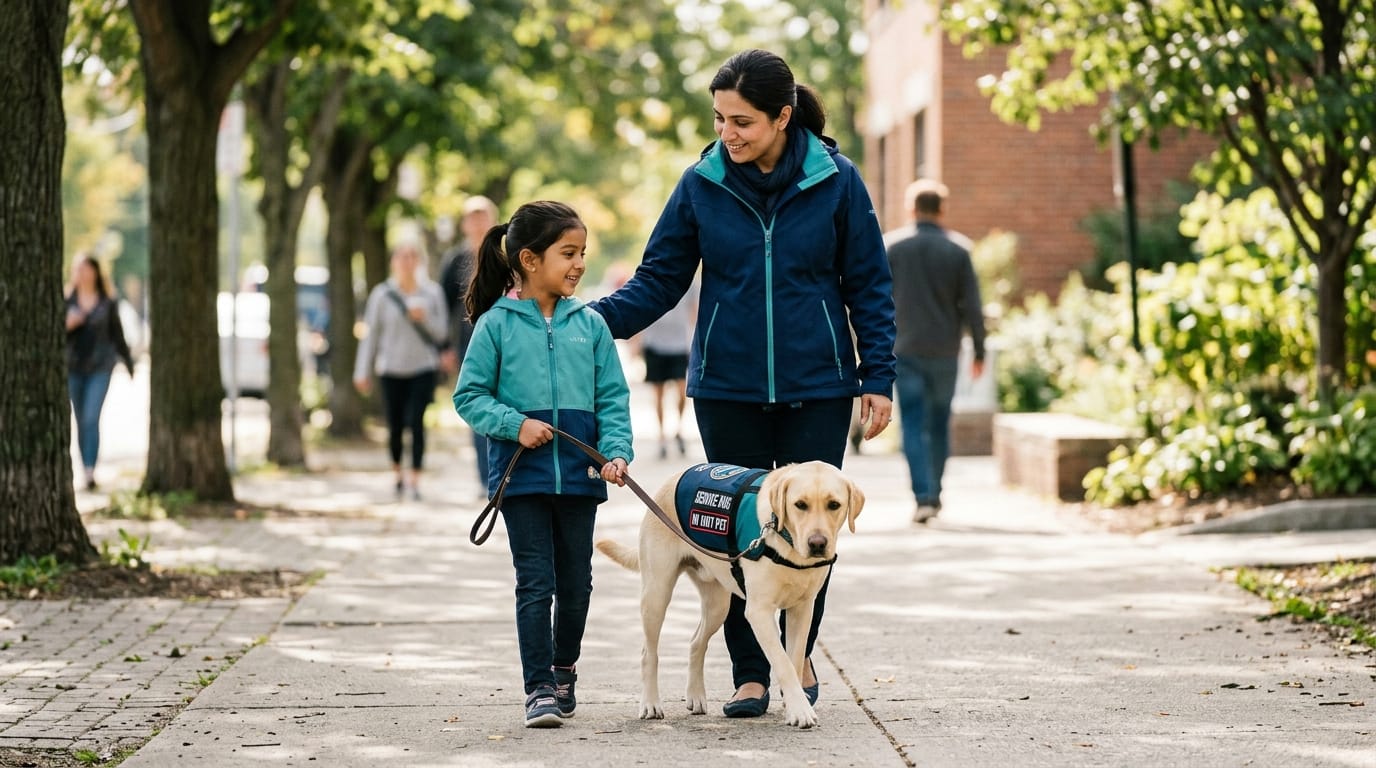
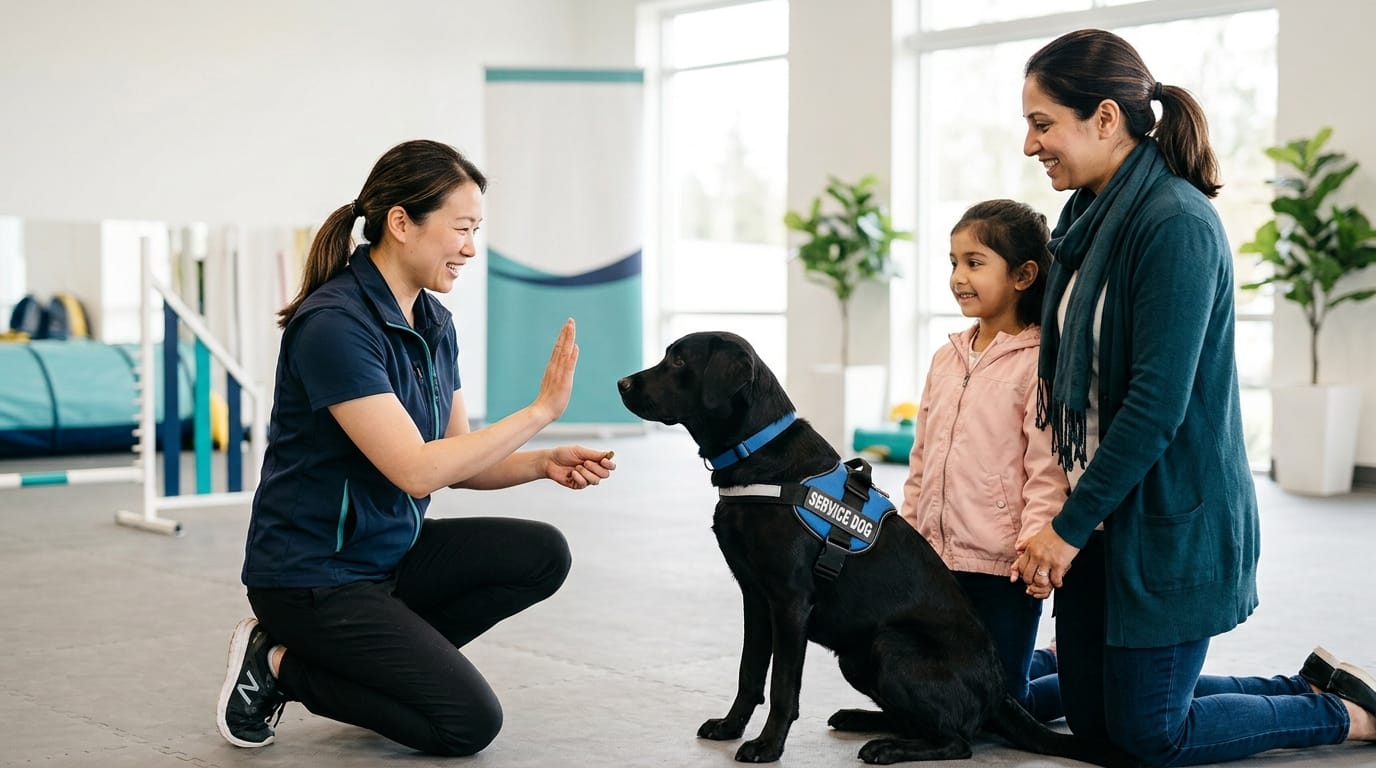
Reputable programs typically start with a dog that has already passed basic obedience and public-access training, then add seizure-specific tasks over several additional months. Training generally covers: activating an alert device, staying near the child during a seizure rather than leaving, learning not to react with fear or aggression to convulsive movement, and in some programs, being taught to lie against the child to reduce injury risk from falling. Total training time from puppy to fully task-trained service dog commonly runs 18 to 24 months.
What This Realistically Costs
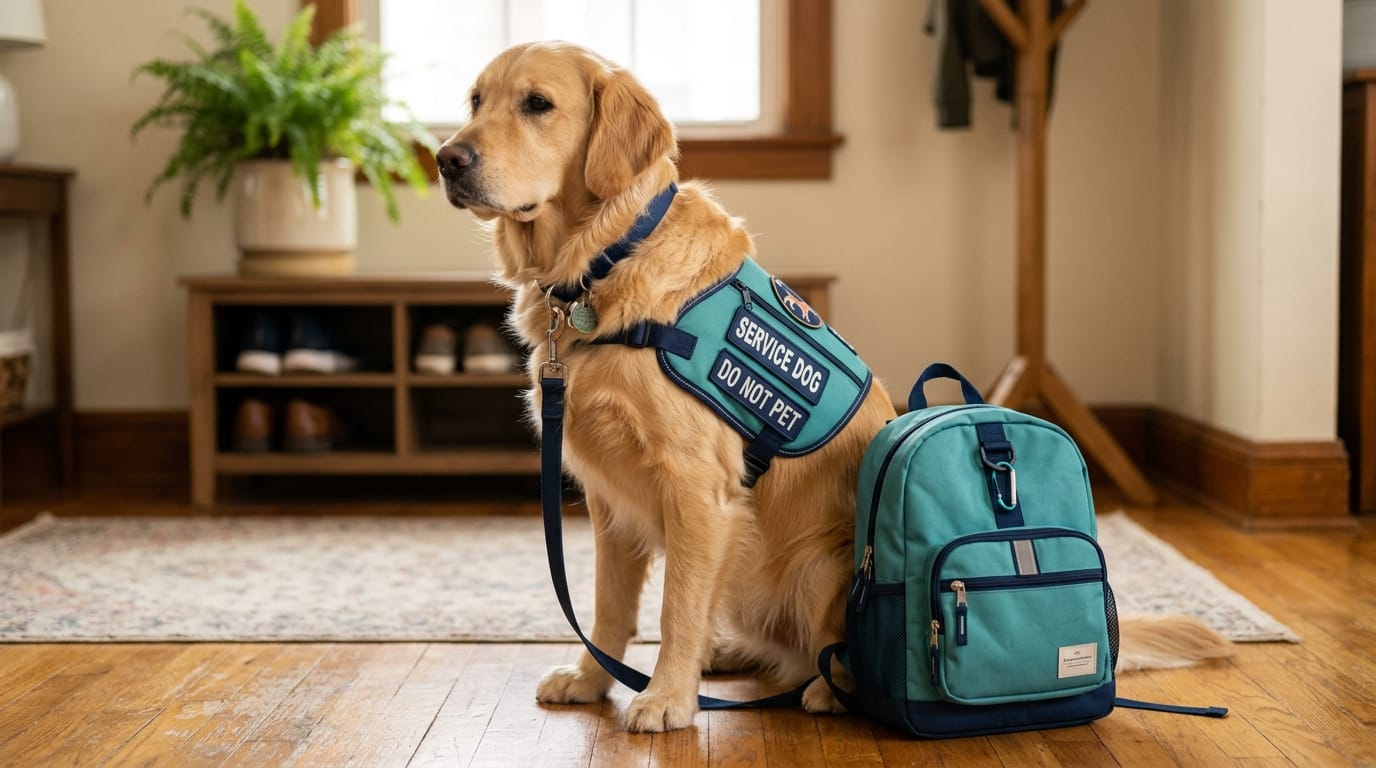
Fully trained seizure response service dogs from accredited nonprofit programs often run $15,000 to $30,000 in raising and training costs, though many programs place the dog itself at no direct cost to the family and rely on fundraising, grants, or donor sponsorship to cover expenses — worth asking about directly rather than assuming it is unaffordable. Owner-trained dogs, where a family works with a professional trainer on their own dog, cost considerably less but require significant time investment from the family itself.
The Legal Side — What ADA Actually Covers
Under the Americans with Disabilities Act, a legitimately trained seizure response dog is a service animal, entitled to accompany a child in public spaces, including school, with some school-specific accommodation processes typically required through an IEP or 504 plan. Emotional support animals — a separate legal category — do not carry the same public access rights, and it is worth understanding this distinction clearly before a school or airline asks for documentation.

What This Means for Your Family
If your primary hope is a dog that will warn you before a seizure happens, be honest with yourself and any program you speak with about how uncertain that specific ability is — and be wary of any organization that guarantees it. If your goal is a dog that helps manage the aftermath of a seizure and provides a genuine, tangible sense of safety and companionship for your child, response training is a well-established, achievable goal with real programs and real track records behind it.
Questions to Ask a Seizure Dog Program
- Is this program accredited by Assistance Dogs International or a comparable recognized body?
- What specific, trainable tasks will the dog perform, and can I see this demonstrated?
- Does the program make any claims about seizure prediction or alerting, and if so, what evidence backs that claim?
- What is the realistic wait time from application to placement?
- What ongoing support does the program provide once the dog is placed with our family?
Frequently Asked Questions About Seizure Dogs
Can any dog be trained to predict seizures?
No. Response tasks can be reliably trained; genuine seizure-predicting ability appears to occur naturally in some individual dogs and cannot currently be reliably taught or guaranteed by a training program.
How long does it take to get a trained seizure response dog?
From application to placement with an accredited program, wait times commonly range from one to three years, given the extensive training timeline and program demand.
Are seizure response dogs covered by insurance?
Generally not. Costs are typically covered through nonprofit program fundraising, family fundraising, or grants specific to service animals rather than health insurance.
Can a seizure dog go to school with my child?
Yes, a legitimately trained service dog has ADA public access rights, including school, though schools typically require documentation and coordination through an IEP or 504 plan process.
The woman from that support group eventually found real value in her family’s dog — not as a predictor, but as a steady presence that made her son feel less alone during a hard year. That is a legitimate reason to pursue one. It is just a different reason than the one she started with, and I think she would want other parents to know the difference going in.
This article is written for informational purposes only and does not constitute medical advice. Always consult your neurologist, paediatrician, or qualified healthcare provider for diagnosis and treatment decisions specific to your child’s situation. Read our full medical disclaimer at braincarepath.com/disclaimer/
Bibliography
- Epilepsy Foundation. Seizure Dogs. Available at: https://www.epilepsy.com/
- U.S. Department of Justice. ADA Requirements: Service Animals. Available at: https://www.ada.gov/
- Assistance Dogs International. Standards for Service Dog Training Programs. Available at: https://assistancedogsinternational.org/