Key Takeaways
- 10–20% of children who survive bacterial meningitis develop epilepsy in the weeks to months after
- Viral encephalitis carries the highest epilepsy risk of any infectious cause — up to 50% for HSV encephalitis
- Post-infectious epilepsy is treated with the same antiepileptic drugs as other forms of epilepsy
- Children whose seizures do not respond to two medications should be referred to a specialist epilepsy centre
- Some children with post-infectious epilepsy achieve full remission — but not all, and that is survivable too
My son’s seizure history did not begin with epilepsy. It began with meningitis. One condition gave us the other, and for months we did not fully understand the connection between them. The seizure he had in the hospital — three days into treatment for bacterial meningitis — was attributed to the acute infection. Normal, we were told. A direct response to inflammation and fever. But the seizures that came afterward, weeks later at home, were something different. Post-infectious epilepsy, the neurologist eventually told us — epilepsy after brain infection — is what this is called when the seizures persist after the infection has been treated and the fever is long gone. This is what happened to our family. And it happens more than most parents are told to expect.
Why Brain Infections Cause Epilepsy in Children
The brain’s neurons — the cells that carry electrical signals — are highly sensitive to inflammation. When an infection like bacterial meningitis, viral encephalitis, or tuberculous meningitis invades the central nervous system, the immune response generates intense inflammation within a confined space: the skull. That inflammation damages neurons directly. It also disrupts the blood-brain barrier — the protective membrane that normally controls what enters the brain — allowing additional immune cells and chemical signals to enter, causing further cellular injury.
This injury can create scar tissue within the brain, and scar tissue is electrically unstable. Areas of scarred or damaged brain tissue can generate abnormal electrical discharges — the mechanism that underlies most forms of acquired epilepsy. This is why children who survive brain infections face a significantly elevated risk of developing epilepsy in the weeks, months, or sometimes years following recovery.
Post-infectious epilepsy (also called acquired epilepsy, or secondary epilepsy) differs from genetic or structural epilepsy in one important way: there is an identifiable external cause. The brain did not develop an electrical vulnerability on its own — the infection created one.
Which Infections Are Most Associated With Epilepsy in Children
Bacterial meningitis — infection of the membranes surrounding the brain and spinal cord — carries a significant post-infectious epilepsy risk, particularly when caused by Streptococcus pneumoniae. Studies suggest that 10–20% of children who survive bacterial meningitis develop epilepsy. Seizures that occur during the acute infection — the first 48–72 hours — do not necessarily predict post-infectious epilepsy, but they raise the index of suspicion.
Viral encephalitis — inflammation of the brain tissue itself, most commonly caused by herpes simplex virus (HSV-1) in children — has the highest epilepsy risk of any infectious cause. Up to 50% of HSV encephalitis survivors develop epilepsy, often with frontal or temporal lobe involvement.
Cerebral malaria — a complication of Plasmodium falciparum malaria affecting the brain — is a leading cause of acquired childhood epilepsy in sub-Saharan Africa and parts of South Asia, including Pakistan.
Tuberculous meningitis (TB meningitis) — a complication of tuberculosis — can cause severe brain inflammation and is associated with particularly high rates of post-infectious complications, including epilepsy, hydrocephalus, and stroke-like events. In our region of Pakistan, TB meningitis is a diagnosis parents in this situation must rule out explicitly.
What the Research Shows
Zoons et al., in a systematic review of neurological complications of bacterial meningitis in children published in Pediatrics at https://pubmed.ncbi.nlm.nih.gov/18450885/, found that epilepsy was among the most common long-term neurological sequelae, occurring in approximately 4–8% of survivors in high-income settings and at higher rates where treatment was delayed. The risk was greatest in children who experienced seizures during the acute illness, had focal neurological signs, or experienced hearing loss after meningitis.
Sellner and Trinka, writing in European Journal of Neurology at https://pubmed.ncbi.nlm.nih.gov/22251425/, confirmed that the specific infection type, organism, and extent of brain involvement were the strongest predictors of post-infectious epilepsy risk. Children with pneumococcal meningitis and those with encephalitis had the highest rates.
Singhi et al., examining childhood epilepsy in developing countries at https://pubmed.ncbi.nlm.nih.gov/21995668/, found that in South Asian populations, post-infectious causes accounted for a substantial portion of newly diagnosed childhood epilepsy cases. This is directly relevant for families in Pakistan and across South Asia.
How Post-Infectious Epilepsy Is Diagnosed and Treated
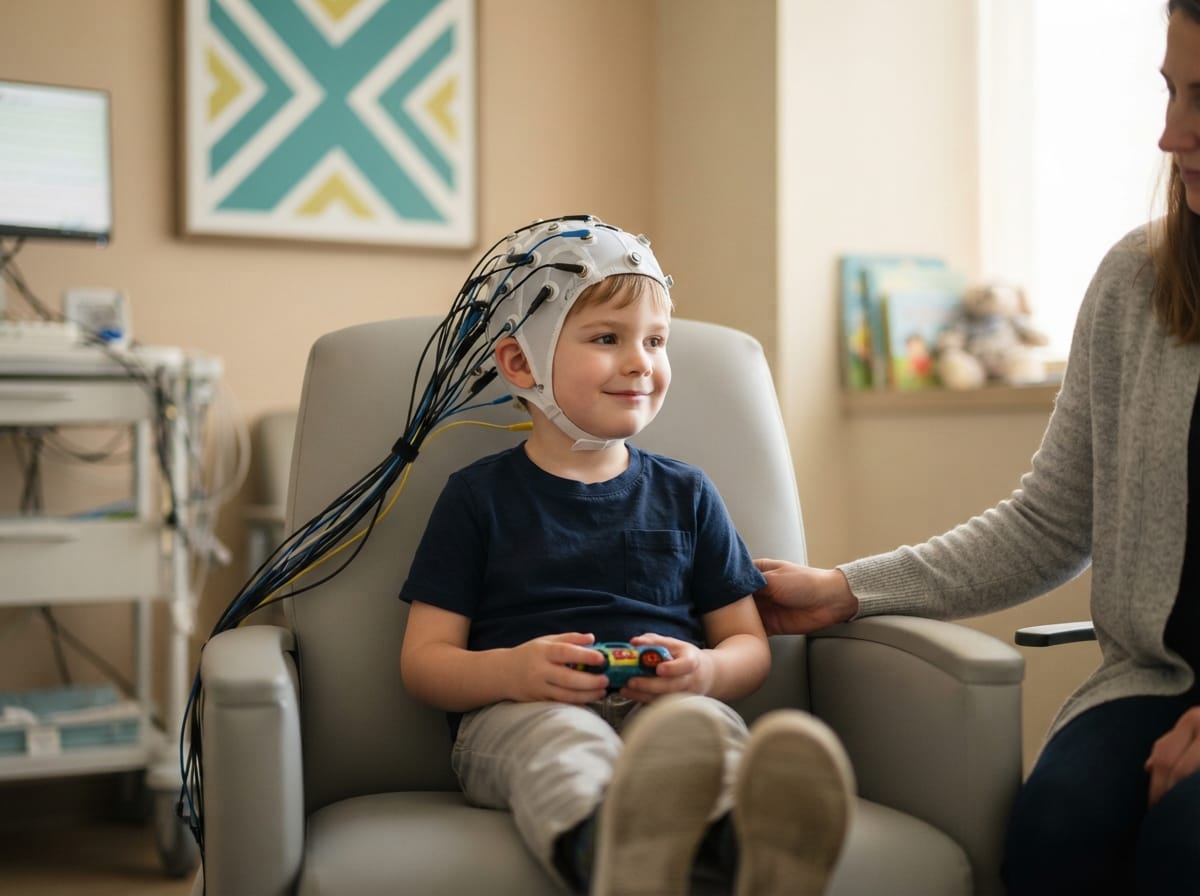
The diagnosis of epilepsy after brain infection follows the same process as other epilepsy diagnoses: at least two unprovoked seizures occurring more than 24 hours apart, after the acute infectious phase has resolved. An EEG (electroencephalogram — a test recording the brain’s electrical activity) and brain MRI are typically both performed to assess the pattern and location of electrical abnormality and identify structural changes from the infection.
Treatment is with antiepileptic drugs (AEDs) — the same medications used for other forms of childhood epilepsy. Commonly used first-line medications in children include levetiracetam, sodium valproate, and carbamazepine. The choice depends on the seizure type, the EEG pattern, and the child’s age and other medications.
Post-infectious epilepsy can be drug-resistant in a proportion of cases — particularly when significant brain injury underlies it. Children with drug-resistant post-infectious epilepsy may benefit from evaluation at an epilepsy centre with experience in acquired epilepsy, where surgical options or dietary therapies such as the ketogenic diet may be considered.
What This Means for Your Family
If your child has been diagnosed with epilepsy following a brain infection, you are navigating two overlapping recoveries simultaneously. The infection itself — and any direct neurological damage it caused — is one recovery track. The epilepsy that developed afterward is another. They interact. A child who is fatigued from post-infectious neurological recovery may have lower seizure thresholds. A child managing seizure medication may have appetite or mood effects that complicate neurological rehabilitation.
These complications do not cancel each other out. They require a joined-up approach — ideally, a team that includes a neurologist familiar with both the infectious history and the ongoing epilepsy, as well as a developmental paediatrician who can monitor the child’s overall progress.
You are probably already managing more than you expected to manage. The additional diagnosis of epilepsy after an already frightening illness can feel like too much. That feeling is valid. It is also survivable — and so, in most cases, is the epilepsy itself.
Questions to Ask Your Neurologist
- Ask your neurologist: Is my child’s epilepsy directly caused by the brain infection, and can this be confirmed on their MRI or EEG?
- Ask your neurologist: Which antiepileptic drug is most appropriate for the type of seizures my child is having?
- Ask your neurologist: What is the chance that my child’s post-infectious epilepsy will resolve over time?
- Ask your neurologist: Should my child be reviewed by a specialist epilepsy centre, given the complex underlying cause?
- Ask your neurologist: Are there any cognitive or developmental assessments that should happen alongside epilepsy treatment?
- Ask your neurologist: What is the plan if the first medication does not control the seizures?
- Ask your neurologist: How long should my child stay on medication before we review whether it can be reduced?

Frequently Asked Questions About Epilepsy After Brain Infection
Can meningitis cause epilepsy in children?
Yes. Bacterial meningitis is one of the most common infectious causes of acquired epilepsy in children. Approximately 10–20% of children who survive bacterial meningitis develop epilepsy in the weeks to months following recovery. Risk is highest in children who experienced seizures during the acute illness, had severe infection, or showed focal neurological signs after recovery. Viral meningitis carries a lower epilepsy risk than bacterial meningitis.
How soon after a brain infection does epilepsy develop?
Post-infectious epilepsy typically becomes apparent within the first six months after the acute illness, though it can develop up to two years later in some cases. Seizures that occur within the first week of the infection are usually classified as acute symptomatic seizures — a direct response to inflammation — and are distinct from post-infectious epilepsy, which involves unprovoked seizures after the infection has resolved.
Is epilepsy after brain infection permanent?
Not necessarily. Some children with post-infectious epilepsy achieve sustained seizure remission, particularly when the underlying brain injury was limited. However, children with significant structural brain damage from infection — visible on MRI as scarring or atrophy — are more likely to have persistent epilepsy. Drug-resistant post-infectious epilepsy exists and may require specialist management including surgical evaluation in appropriate cases.
What is the best treatment for epilepsy caused by brain infection?
Treatment follows standard antiepileptic drug protocols, with medication chosen based on seizure type and the child’s specific situation. First-line options typically include levetiracetam, sodium valproate, or carbamazepine. Children whose seizures do not respond to two appropriate medications should be referred to a specialist epilepsy centre for further evaluation, including consideration of dietary therapies, nerve stimulation, or surgical assessment.
My son’s post-infectious epilepsy resolved after eighteen months. We do not know why it resolved when it did — the neurologist said the brain had likely formed enough compensatory pathways that the scar tissue was no longer triggering abnormal discharges. I accepted that answer because it was the honest one. Not every family gets that resolution. But the fact that it is possible — and that treatment, monitoring, and time all work together toward it — is worth knowing when you are at the beginning of this, staring at a diagnosis you never expected.
Quick answer: Yes. Bacterial meningitis is one of the most common infectious causes of acquired epilepsy in children, with 10 to 20 percent of survivors developing epilepsy in the weeks to months following recovery. Risk is highest in children who had seizures during the acute illness or a severe infection.
Medical Disclaimer: This article is written for informational purposes only and does not constitute medical advice. Always consult your neurologist, paediatrician, or qualified healthcare provider for diagnosis and treatment decisions specific to your child’s situation. Read our full medical disclaimer at braincarepath.com/disclaimer/