
Key Takeaways
- Epilepsy does not always get worse with age — for many children it improves or resolves entirely
- Approximately 60–70% of children with newly diagnosed epilepsy achieve long-term remission
- The epilepsy syndrome your child has is the strongest predictor of their long-term trajectory
- Puberty can temporarily change seizure patterns in some children — this is not the same as worsening
- Knowing your child’s specific syndrome is the most important step toward understanding their prognosis
Can epilepsy get worse with age? The fear arrives quietly, usually somewhere between the second and sixth month after diagnosis, once you’ve begun to understand what epilepsy looks like today and a new question surfaces: is this the ceiling, or is there something harder ahead? I asked myself this in slightly different forms over the first year of our family’s experience with seizures following our son’s meningitis. The honest answer is nuanced enough that I want to give you the full picture, not just the reassurance.
What “Getting Worse” Actually Means in Epilepsy
Before answering whether epilepsy gets worse with age, it helps to be precise about what worse means. In epilepsy, deterioration can take several forms: increased seizure frequency (more seizures per week or month), increased seizure severity (longer seizures, more intense post-ictal recovery, secondary generalisation of focal seizures), the emergence of new seizure types, or drug resistance — the situation where two or more appropriate medications have failed to control seizures adequately.
Each of these trajectories is distinct. A child whose seizures become more frequent on a stable medication dose may be developing tolerance — a pharmacological issue, not necessarily a sign of underlying progression. A child who develops a new seizure type during adolescence may be experiencing syndrome evolution — a known pattern in some epilepsies, not a sign of general deterioration. Understanding which type of change you are looking at helps avoid the catastrophising that, understandably, often accompanies any change in seizure pattern.

Can Epilepsy Get Worse — or Better — With Age?
The more common trajectory for childhood epilepsy is improvement, not deterioration. Research consistently shows that the majority of children with newly diagnosed epilepsy achieve long-term seizure remission — typically defined as five or more seizure-free years. Estimates across large studies range from 60–70% of children achieving this threshold.
Certain epilepsy syndromes are genuinely self-limiting. Benign rolandic epilepsy — one of the most common childhood epilepsy syndromes — resolves in virtually all cases by mid-adolescence, often without any medication at all. Childhood absence epilepsy resolves in 60–70% of affected children by early adolescence. These conditions do not get worse. They follow a developmental arc and then stop.
Even in children whose epilepsy does not fully resolve, the seizures often become easier to manage over time — particularly as the treating team identifies the optimal medication regimen and the child’s own brain matures. The picture at age four is frequently not the picture at age ten.

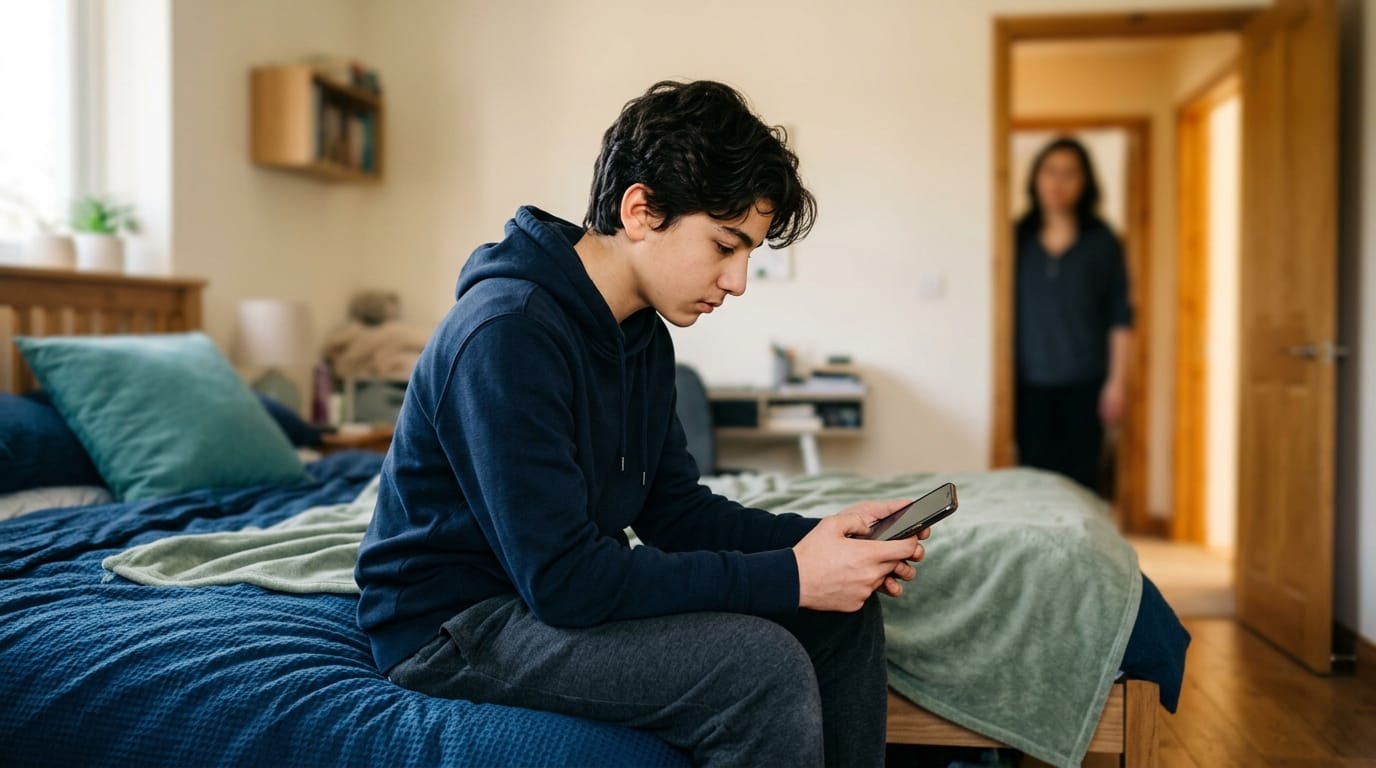
The Role of Puberty in Epilepsy Progression
Puberty deserves its own section, because it is the period most commonly associated with seizure pattern changes — for better and for worse. The hormonal shifts of puberty alter the excitability of the brain. Oestrogen, in high doses, tends to lower seizure thresholds (making seizures more likely). Progesterone tends to raise them (making seizures less likely). The balance between these hormones shifts considerably during puberty, and for some young people this shift temporarily destabilises previously well-controlled epilepsy.
This is not the same as the epilepsy itself getting worse. It is a temporary modulation of seizure threshold driven by developmental change. In many cases, seizure control restores once the hormonal environment stabilises in late adolescence or early adulthood.
Juvenile myoclonic epilepsy (JME) — which typically emerges in early adolescence — may appear to represent “new” or “worsening” epilepsy, but it is a distinct syndrome with its own trajectory, rather than a deterioration of pre-existing childhood epilepsy.

What the Research Shows About Long-Term Trajectory
Geerts et al., following 494 children with epilepsy over 15 years in the Dutch Study of Epilepsy in Childhood at https://pubmed.ncbi.nlm.nih.gov/20573135/, found that the majority achieved sustained remission, with remission rates highest among children with idiopathic epilepsy syndromes. Children with structural-metabolic epilepsy — where there is a brain lesion or metabolic cause — had lower remission rates, but a significant proportion still achieved periods of seizure freedom.
Sillanpää and Schmidt, in a landmark 40-year Finnish study at https://pubmed.ncbi.nlm.nih.gov/22882798/, found that early seizure clustering — multiple seizures in the first months after diagnosis — was associated with lower rates of eventual remission. This finding is important because it suggests the early trajectory matters: children whose seizures are well-controlled from the start tend to do better long term.
Berg et al., studying 613 children prospectively over ten years at https://pubmed.ncbi.nlm.nih.gov/16499754/, found that approximately 47% achieved five-year remission and were off medication by the end of the study period. This figure rises when you focus on children with benign syndromes.
Annegers et al., in a population-based study at https://pubmed.ncbi.nlm.nih.gov/11357399/, confirmed that remission rates for childhood-onset epilepsy are substantially better than for adult-onset epilepsy, supporting the role of developmental factors in determining outcome.
What This Means for Your Family
The most important single piece of information for understanding your child’s trajectory is their epilepsy syndrome diagnosis. If your neurologist has given you a syndrome name — childhood absence epilepsy, benign rolandic epilepsy, Dravet syndrome, Lennox-Gastaut — that name comes with a known natural history. Ask your neurologist explicitly: what does the long-term trajectory typically look like for this syndrome?
If your child’s epilepsy has not been classified into a syndrome, that ambiguity is itself clinically meaningful. Ask: is this a syndrome that cannot yet be classified, or is it genuinely unclassifiable? The answer shapes the prognosis conversation significantly.
Track seizures consistently. A seizure diary — whether paper or app-based — allows you to identify patterns, notice changes, and have evidence-based conversations with your neurologist at every appointment. Changes in seizure frequency or character are worth noting and discussing; they are not always cause for alarm, but they are always worth raising.

Questions to Ask Your Neurologist
- Ask your neurologist: Does my child have a recognised epilepsy syndrome, and what is the typical long-term trajectory for that syndrome?
- Ask your neurologist: Is there anything in my child’s current seizure pattern that suggests their epilepsy may be progressive?
- Ask your neurologist: What changes in seizure frequency or character should prompt an unscheduled review?
- Ask your neurologist: How might puberty affect my child’s epilepsy, and what should we watch for?
- Ask your neurologist: If my child’s epilepsy does not improve with age, what are the next steps?
- Ask your neurologist: What is the likelihood of my child achieving medication-free remission?
Frequently Asked Questions About Epilepsy and Ageing
Does childhood epilepsy get worse with age?
Not usually. The majority of children with newly diagnosed epilepsy — approximately 60–70% — achieve long-term seizure remission. Many epilepsy syndromes that begin in childhood are self-limiting and resolve by adolescence. The specific syndrome your child has is the strongest predictor of their trajectory. Some syndromes are more likely to persist into adulthood, but even these are often manageable with appropriate medication.
Can epilepsy suddenly get worse?
Seizures can temporarily worsen due to illness, sleep deprivation, missed medication, hormonal changes during puberty, or psychological stress — none of which represent true deterioration of the underlying epilepsy. A genuine sustained increase in seizure frequency or the development of new seizure types warrants review with your neurologist to assess whether the medication plan needs adjusting or the diagnosis needs revisiting.
At what age does epilepsy typically improve in children?
The timing depends entirely on the epilepsy syndrome. Childhood absence epilepsy commonly improves by early adolescence. Benign rolandic epilepsy resolves by mid-adolescence in almost all cases. Some children achieve remission in their early adult years even after a decade of seizures. There is no universal age — this is why syndrome-specific prognostic conversations with your neurologist are so important.
What makes epilepsy worse in a child?
Known seizure triggers include sleep deprivation, illness with fever, missed or late medication doses, excessive screen time in photosensitive epilepsy, and significant physical or emotional stress. During puberty, hormonal shifts can temporarily lower seizure thresholds. Identifying your child’s personal triggers — which vary between individuals — is one of the most practical things a family can do to reduce seizure frequency day to day.
When should I be worried that my child’s epilepsy is getting worse?
Contact your neurologist if your child is having more frequent seizures over a sustained period despite taking medication correctly, if a new seizure type appears, if seizures are lasting longer than usual, or if recovery from seizures seems significantly longer or more difficult. These changes do not always indicate deterioration — they may reflect medication tolerance or a growth-related dose adjustment need — but they deserve prompt medical review.
The question of whether epilepsy gets worse is one of the most loaded in paediatric neurology because it carries so much fear. What the research says, consistently, is that the most likely trajectory is toward improvement — sometimes gradual, sometimes dramatic. That is not a promise. Some children do face a more complicated path. But the honest statistical expectation, particularly for children with well-classified idiopathic epilepsy syndromes, is that time and treatment work together toward a better situation, not a worse one.
Quick answer: Not usually. The majority of children with newly diagnosed epilepsy — roughly 60 to 70 percent — achieve long-term seizure remission. Many childhood epilepsy syndromes are self-limiting and resolve by adolescence. The specific syndrome your child has is the strongest predictor of their trajectory.
Medical Disclaimer: This article is written for informational purposes only and does not constitute medical advice. Always consult your neurologist, paediatrician, or qualified healthcare provider for diagnosis and treatment decisions specific to your child’s situation. Read our full medical disclaimer at braincarepath.com/disclaimer/