
Quick answer: Muscle weakness after a neurological illness or injury often comes from disrupted signals between the brain and muscles, not just the muscles themselves. Gentle stretching maintains flexibility and range of motion while sending repeated sensory and motor signals through the affected pathways.

My son’s left side was weaker than his right. We noticed it first in the way he held his arm — slightly bent at the elbow, pulled in. The physiotherapist noticed it in his gait — the slight drag of the left foot, the way his left hand reached for things a fraction slower than his right.
She gave us exercises to do at home. I want to share, in plain language, what those exercises looked like — because many families are in the same position: waiting for the next appointment, wanting to do something in the meantime.
What These Exercises Do for the Brain
Muscle weakness after neurological illness is rarely purely a muscle problem. The weakness is often neurological — the brain’s signals to the affected muscles are disrupted. Gentle stretching serves two purposes: it maintains flexibility and range of motion in underused muscles, and it sends repeated sensory and motor signals through affected neural pathways, encouraging the brain to strengthen those connections over time. This is neuroplasticity in practice. Every gentle stretch is a message from the body to the brain: this pathway exists. use it.
Who These Exercises Are For
Key Takeaways
- Muscle weakness after neurological illness often reflects disrupted brain-to-muscle signals, not just the muscles themselves
- Gentle stretching maintains flexibility while sending repeated sensory and motor signals through affected neural pathways
- Always consult your child’s physiotherapist, pediatrician, or neurosurgeon before starting
- The full daily routine takes about 12 to 15 minutes, done once a day
- Children aged 2 to 10 years
- Children with hemiplegia (weakness on one side of the body)
- Children with generalised muscle weakness following neurological illness, brain surgery, or prolonged hospitalisation
- Children post-VP shunt surgery or after seizure-related neurological events
Before starting: Always consult your child’s physiotherapist, paediatrician,or neurosurgeon before beginning. For one-sided weakness: All exercises below include a specific modification. Encourage the weaker side — do not force it, but offer consistent gentle guidance.
How to Do It — Step by Step
Complete this routine once daily. Each exercise takes approximately 2 minutes. Total: 12–15 minutes.
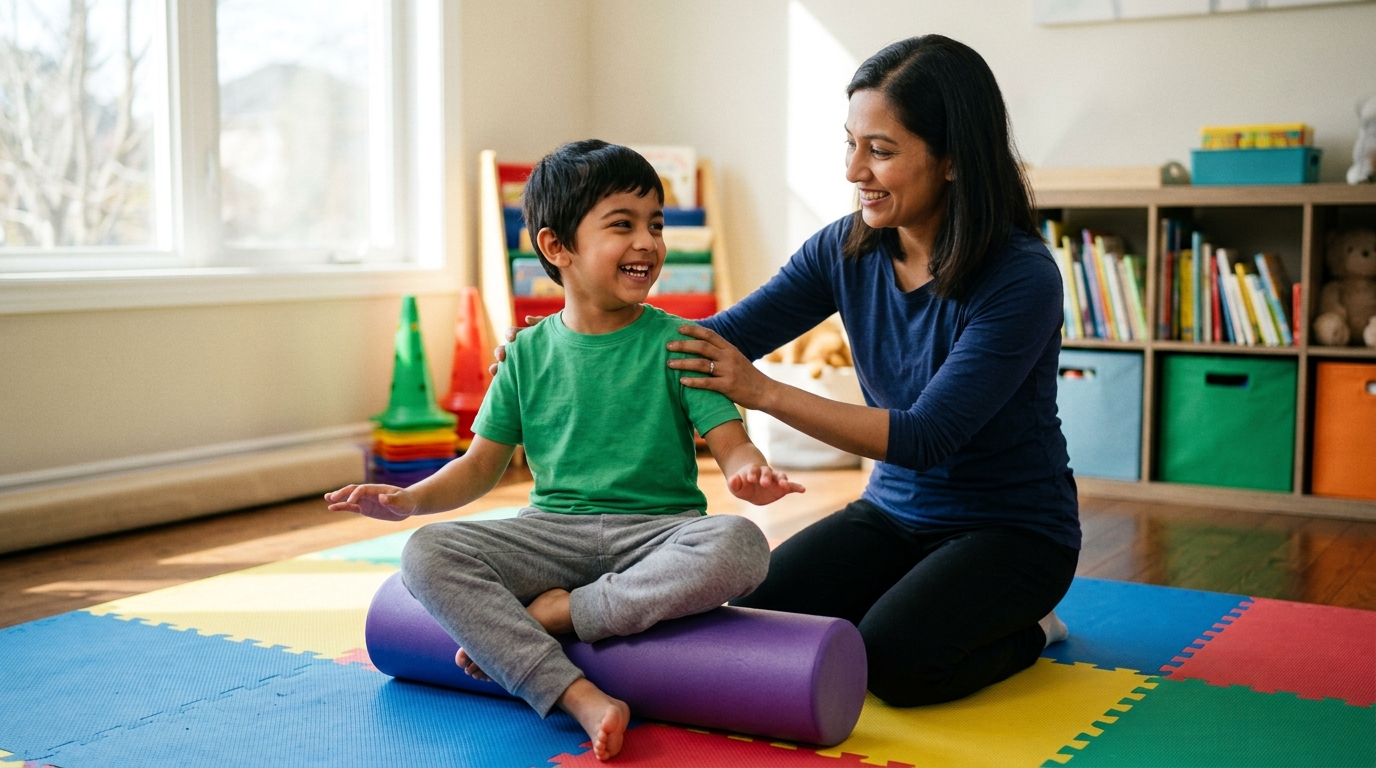
Exercise 1 — Seated Arm Raises: Sit your child upright. Take their wrists and lift both arms slowly to shoulder height. Hold 5 seconds. Lower slowly. 6 repetitions. One-sided weakness: Guide the weaker arm more slowly; do not force to full range if it resists.
Exercise 2 — Shoulder Rolls: Stand or sit behind your child. Gently roll both shoulders forward 5 times, then backward 5 times. Move slowly and smoothly. One-sided weakness: You may feel less natural movement in the weaker shoulder. Continue guided movement — you are creating sensory input even when voluntary movement is limited.
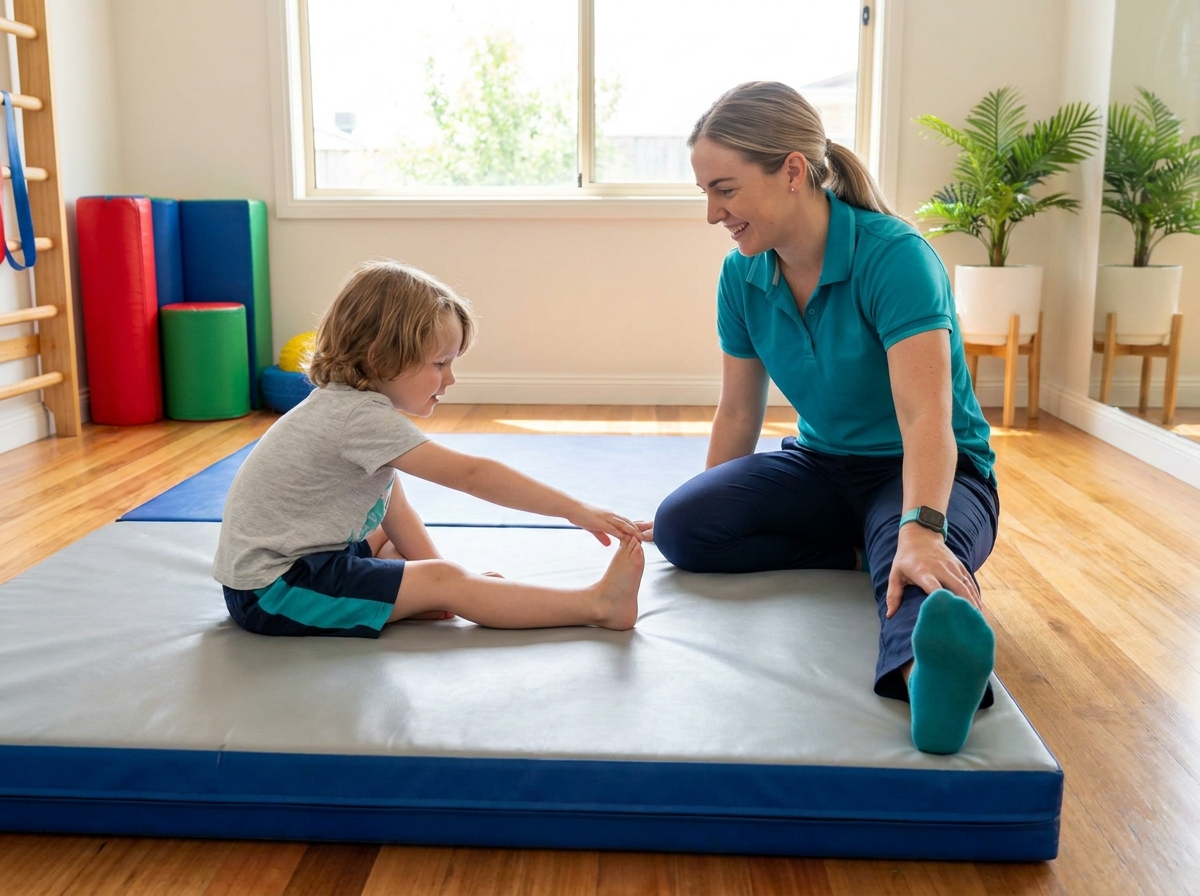
Exercise 3 — Gentle Hamstring Stretch: Sit your child on a mat, legs straight. Support their back and hold one ankle, raising it slightly (20–30 degrees). Hold 5 seconds. Lower. Alternate legs. 3 repetitions each side. One-sided weakness: Start with the stronger leg. The weaker leg may have limited range — do not push through resistance.
Exercise 4 — Ankle Circles: Sit your child with feet off the floor or lie them on their back. Hold one foot and slowly rotate the ankle — 5 rotations clockwise, 5 anticlockwise. Repeat on the other side. Maintains ankle flexibility and reduces risk of foot drop worsening.
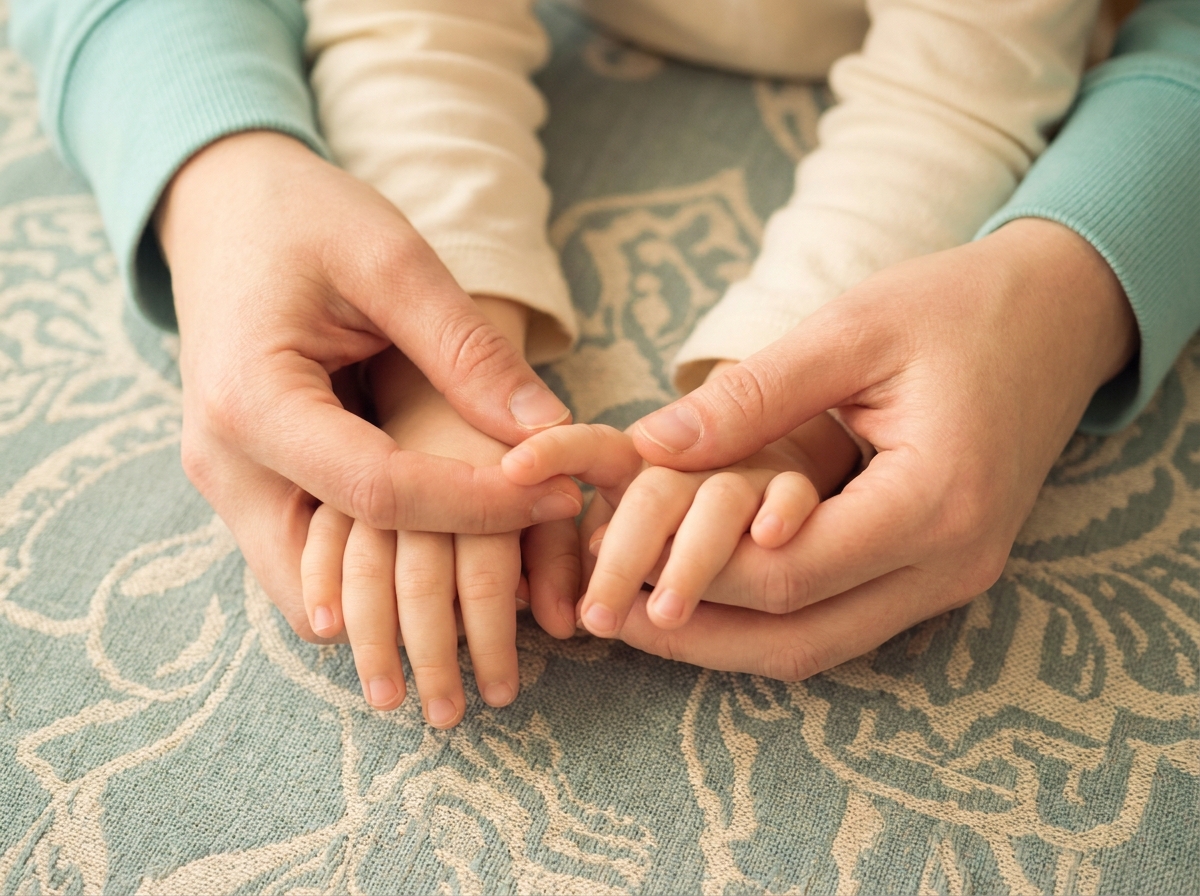
Exercise 5 — Wrist Flexion and Extension: Hold your child’s wrist, palm facing down. Slowly bend the wrist down (flexion), hold 3 seconds. Slowly bend back (extension), hold 3 seconds. 5 repetitions each side. One-sided weakness: The weaker wrist may show more resistance. Move gently within allowed range — over weeks you will notice improvement.
Exercise 6 — Supported Walking and Weight Shift: Stand behind your child, hands lightly on their hips. Encourage 10 slow, deliberate steps. Focus on full foot contact. One-sided weakness: Walk beside them with one hand on the weak side’s hip, encouraging weight through the weaker leg. If not yet walking independently, supported weight-bearing at a low table achieves the same goal.
How to Progress Over Time
Week 1: Exercises 1, 4, and 5 only. One set each, once daily. Week 2: Add exercises 2 and 3. Two sets of the first three. Week 4: Full routine once daily; begin increasing repetitions. Month 2 onwards: Share this routine with your physiotherapist. Track progress in a simple diary: note which exercises completed, whether the weaker side showed any change in range, and any pain or discomfort.
A Note for Families Navigating Neurological Recovery
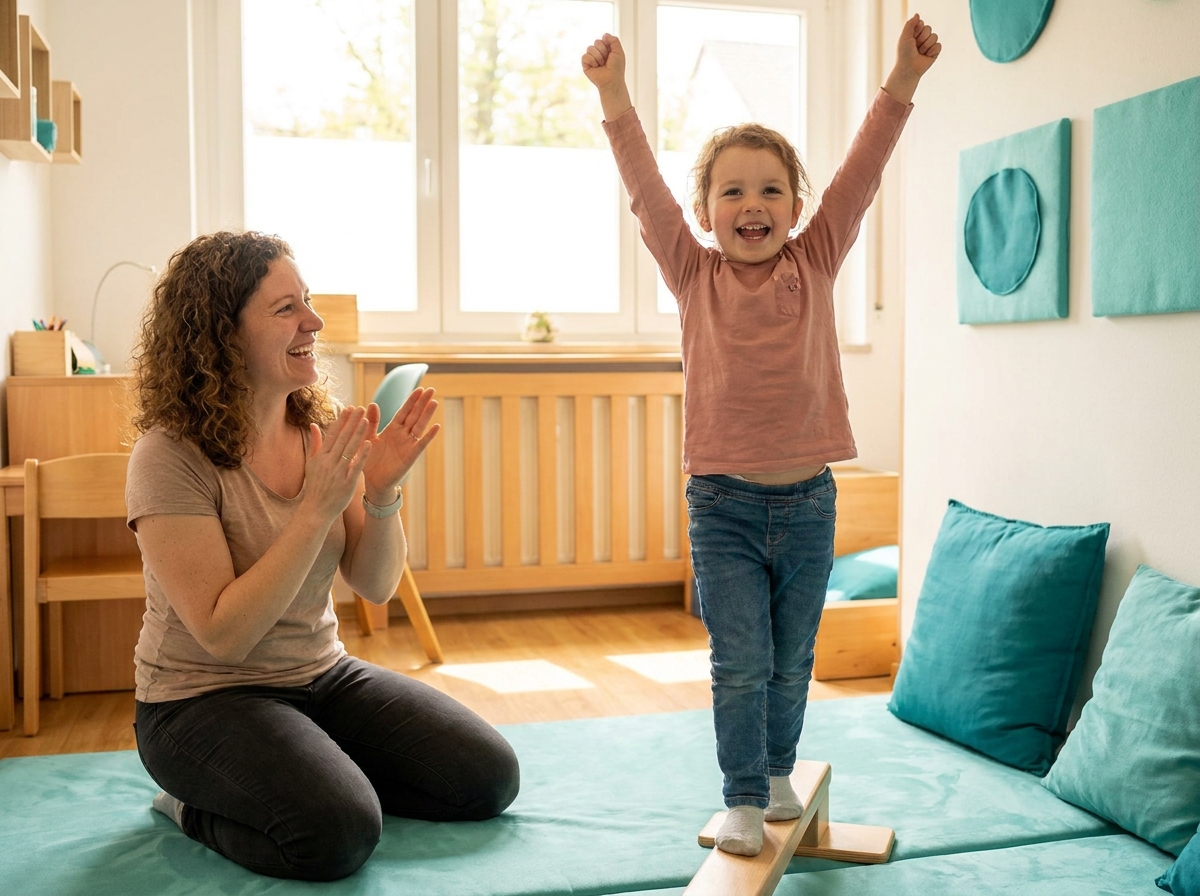
My son’s physiotherapist said something I have returned to many times: “The goal is not a perfect range of motion right now. The goal is that his brain remembers these limbs exist.” That idea changed how I thought about our home exercises. We were not trying to force his left arm to do what his right arm did. We were reminding his brain, daily, persistently, gently, that the left side was there and worth investing in.
The Research Behind This
A 2021 meta-analysis by Sobana et al. found that children who received structured post-surgical rehabilitation alongside VP shunt placement showed significantly better neurodevelopmental outcomes. Research on constraint-induced movement therapy consistently shows benefits in children with hemiplegia. Sanderfer et al. (2024) reinforced that recovery is shaped not just by surgery but by what happens in the weeks and months following.
This article is written for informational purposes only and does not constitute medical advice. Always consult your neurologist, pediatrician, or qualified healthcare provider for diagnosis and treatment decisions specific to your situation.
Bibliography: 1. Sobana M et al. Childs Nerv Syst. 2021. https://pubmed.ncbi.nlm.nih.gov/33479825/ 2. Sanderfer VC et al. Am J Surg. 2024. https://pubmed.ncbi.nlm.nih.gov/37827869/ 3. Hosainey SAM et al. Neurosurg Rev. 2022. https://pubmed.ncbi.nlm.nih.gov/34713351/

Frequently Asked Questions About Stretching Exercises for Children with Muscle Weakness
Why do stretching exercises help children with neurological muscle weakness?
Muscle weakness after a neurological illness or injury often comes from disrupted signals between the brain and muscles, not just the muscles themselves. Gentle stretching maintains flexibility and range of motion while sending repeated sensory and motor signals through the affected pathways.
Who should do these exercises, and are there precautions?
Always consult your child’s physiotherapist, pediatrician, or neurosurgeon before starting. For children with one-sided weakness, each exercise includes a modification — gently encourage the weaker side without forcing it.
How long does the exercise routine take?
The full routine is done once daily and takes about 12 to 15 minutes total, with each individual exercise taking roughly 2 minutes to complete.